Alongside Get Carter, this is the dog's bollocks of British gangster films and a veritable who's who of several decades worth of UK film and TV.
"The Mafia? I've shit 'em!"
Letterboxd Review
Horror / Giallo / Exploitation / Underground / Sci-Fi / Experimental / Poliziotteschi/ Trash / Drone / Punk / Noise / Metal / Jazz
Showing posts with label crime. Show all posts
Sunday, 2 April 2017
Friday, 2 December 2016
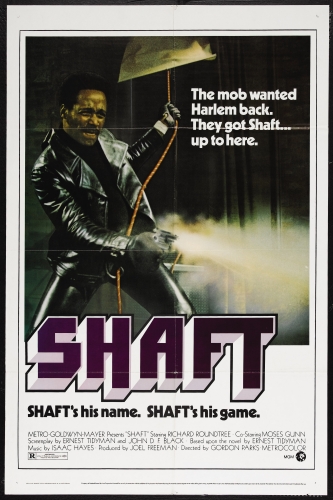
Shaft (1971)
That intro with John Shaft just casually walking across a busy street and expecting cars to just stop for him, builds his character perfectly. No exposition or flashbacks needed; just a bloke walking across a road. Shaft is indeed a bad mother-fucker and he owns his city.
Great dialogue, terrific NYC locations, full of great fleshed-out characters, THAT score by Chef and The Bar-Kays, the final rescue, Richard "I'm a handsome fucker" Roundtree.
Cool as fuck.
The "Soul in Cinema: Filming 'Shaft' on Location" extra on my DVD was pretty damned fine as well and includes Isaac Hayes and The Bar-Kays recording the score.
Letterboxd Review
Labels:
action,
blaxploitation,
crime,
dvd,
exploitation,
great,
race,
thriller
Monday, 19 September 2016
Deadbeat at Dawn (1988)
With Deadbeat at Dawn, One-man-army
(writer, director, actor, editor, makeup, stuntman) Jim VanBebber
created one of the finest ultra-low budget films ever made.
A brutal, crank-fuelled, nihilistic, nightmare of an action film. Even better than you think it's going to be.
Just remember kids, crime does not pay!
Nope-Tober: Random Shit for an Ill-disciplined Mind
Letterboxd Review
A brutal, crank-fuelled, nihilistic, nightmare of an action film. Even better than you think it's going to be.
Just remember kids, crime does not pay!
Nope-Tober: Random Shit for an Ill-disciplined Mind
Letterboxd Review
Labels:
action,
crime,
dvd,
exploitation,
great,
nopetober,
synapse,
underground
Sunday, 24 July 2016
The French Connection (1971)
Popeye Doyle is still the coolest
motherfucking detective to walk the celluloid streets. He may be a
heavy-handed misanthrope but with his shabby suit, skinny tie and
porkpie hat he's a down-at-the-heel brownstone tenement standing
steadfast against the gentrification surrounding him, a man out of time
who casually shits all over those cravated, polo-necked and
flared-collared, dedicated followers of fashion.
No one, but no one, wears a porkpie like Popeye.
Letterboxd Review
No one, but no one, wears a porkpie like Popeye.
Letterboxd Review
Sunday, 29 May 2016
Tuesday, 15 December 2015
Live Like a Cop, Die Like a Man (1976)
I watched the 88 Films Blu-Ray in Italian with English subtitles.
Live Like a Cop, Die Like a Man is great title but will the film live up to it?
Directed by Ruggero Deodato (Cannibal Holocaust, House on the Edge of the Park), with a screenplay by Fernando Di Leo (Milano Calibro 9, The Boss) and starring Marc Porel (Don't Torture a Duckling, The Psychic) as Fred and Ray Lovelock (Almost Human, The Living Dead at Manchester Morgue) as Tony; a pair of plain clothes police officers who belong to "The Special Squad". They don't care about the rules and if anyone at city hall doesn't like it, they can swivel! Backing them up is their boss Adolfo Celi (Thunderball). How's that for an exploitation pedigree!
There really isn't much of a plot. There's a basic storyline in which our two heroes try to take down the local kingpin who, meanwhile, is trying to discover their identities. That's not really very important as it's all about how they get to that end point. It seems that there's a shoot-out, car/bike chase, punch-up or sex every 10 minutes.
The film starts with Lovelock (in full-on Robert Redford mode) getting a "backy" from Porel on his motorbike to some groovy sounds. They both look so clean cut. It's almost like a younger and more handsome Ratso giving Joe Buck a ride. This is a real pair of handsome fuckers! However, this no ordinary bike ride and the dynamic duo foil a nasty mugging and take off after the scumbags and into what is probably the best vehicle chase scene in Italian cinema history; impressively chaotic and destructive. No cardboard boxes or sheets of glass were harmed although a poor guide dog doesn't fair too well.
From here on in the film is a wild storm of sex and guns.
Often compared to Dirty Harry, to me Live Like a Cop, Die Like a Man is more like those boy's own, buddy cop movies and shows from the 1970s: Starsky & Hutch, The Professionals, The Sweeney, and the freeze-frame ending was straight out of Butch Cassidy and the Sundance Kid. I've also read about the homoerotic subtext, but I believe that the two leads are more like two little boys who just never grew up. The women in the film treat them as boys and not men. The city is their playground where they play "war" against another gang of boys (note the target practice scene in the quarry at 01:12:00). When you think about it, most of these type of films follow the same pattern of men as boys and I don't think that there's anything particularly wrong with that at all. Fred and Tony may be sociopathic boys, but boys nonetheless.
Yes, there's a fair amount of chauvinism but this is tempered quite brilliantly by the attitudes of the women. During one scene they ask their boss's secretary with which of them she'd like to sleep; she replies with an unexpectedly brilliant comeback. A little while later there's a scene where both Tony and Fred are screwing a suspect's sister, the woman is dominant throughout and exhausts the men. Finally, their libido's nearly gets them killed. Most progressive and un-Italian!
The performances are terrific with a real chemistry showing between the two leads. There's a cool and funky soundtrack that's all full of horns, Rhodes keyboard and loads of groove. The film is immaculately shot with really impressive camera-work during the action scenes and some excellent gore effects with loads of Humbrol red blood. The dialogue has a natural touch and doesn't sound at all forced. It's also nicely witty in places.
The 88 Films Blu-Ray has an excellent picture and sound. The subs are pretty good and seem to follow the dialogue with only the occasional spelling or grammatical error. The only extras are a trailer and some stills, but both English and Italian soundtracks are included.
Live Like a Cop, Die Like a Man has high octane thrills, handsome fuckers with guns, bike chases and explosions. It's loud, crude, funny and energetic. One of the finest buddy/cop movies ever made.
Letterboxd Review
Sunday, 1 November 2015
Milano Calibro 9 (1972)
This review is for the Arrow Video Blu-Ray with the Italian soundtrack and English subtitles.
A simple story of a missing $300,000 which the local mob, headed by il Americano, assumes has hidden by Ugo. Recently released from prison, Ugo must either find the money and clear his name with the Americano or die. As if that's not enough, Ugo has to deal with the local Milano fuzz.
Milano Calibro 9 is an Italian crime thriller from '72 with a super cool title (damn those Italians and their titles!) and it is not your average Poliziotteschi - this film adds a dash of socialism to the mix of guns, money and girls.
Gastone Moschin is terrific as the morose Ugo. While everything around him is exploding he somehow manages to be the calm in the eye of the storm. Even when getting slapped around you know that there will be payback, even if you're not entirely sure how or when. Of course we need a hothead to play against taciturn Ugo and that is ably supplied by Mario Adorf's Rocco. A veritable whirlwind of energy, wisecracks, gurning and one of the dirtiest laughs I've heard on screen. He reminded me of a cross between George Cole's Flash Harry from the St. Trinians films and Pops from the League of Gentlemen - a scenery chewing spiv! Then we have il Americano, played by guess who? Only fucking Hart to Hart's Lionel Stander!
So where does the socialism come from? The police! We have the usual incompetent police force, but this time it's not their stupidity that stops them from solving the crime, it's their inability to work together without bickering over politics. We have one detective who believes in the capitalist economy and the other who wants prison reform and the re-distribution of wealth. This is also mirrored with the differences between il Americano (the capitalist) and Ugo (the socialist).
Another interesting theme is the way the film juxtaposes the traditional against the modern, with Ugo's old boss Don Vincenzo, now living in a crumbling tenement with his ageing enforcer Chino, against il Americano's brash young thugs. The director could also be showing us the effect of American influences on Italian society (the old traditional Don in poor health, blind and with no influence versus il Americano).
To balance the political message we have the usual Poliziotteschi action sequences including the novel use of dynamite to get rid of some bodies. There are black Mercedes', shoot-outs, explosions, punch ups and go-go dancing. Even J&B Whisky makes makes several, hilariously obvious, appearances.
Some favourite moments: Rocco silencing his punch by pushing a pillow against someone's face; the aforementioned dynamite scene; the swimming pool shot towards the end looking remarkably like the scene from Magnum Force (even though that film came out a year later); the way Chino doesn't throw his pistol away (a la Hollywood) when it's empty.
Possibly my favourite scene though is when Chino fights Rocco and his hoods. Rocco finds out that it is Chino (and by implication Don Vincenzo) he is fighting and even though Chino is obviously washed-up, Rocco still gives back the money he stole from Ugo and asks permission to leave the apartment. Money and influence comes and goes; reputation is everything in Milano Calibro 9.
The film is economically shot and very nicely paced. The performances are excellent all round and the soundtrack is full of strings, heavy bass, flaming guitars and flutes. Groovy, with a heavy Euro-funk vibe that manages to not come over like a continental Starsky & Hutch. The Arrow Blu-Ray is excellent with no noticeable DNR and a nice subtle grain.
Whichever way you look at it Milano Calibro 9 is a fine film with hidden depths.
Saturday, 12 September 2015
The Usual Suspects (1995)
WARNING: The following review will contain a major spoiler for the few fools left that have not seen The Usual Suspects.
A serendipitous evening of film! I first re-watch The Usual Suspects (a homage to film-noir) and then decide to watch Blow Out (a homage to giallo) without meaning to place them together at all. Spooky!
For some reason The Usual Suspects didn't stand out as film-noir the first time I watched it, but on this viewing it hit me like a lead-filled sap to the back of the neck. The shadows contrasting with occasional bright sunshine, a convoluted plot, revenge, wonderful camera angles (downward, upward and over shoulder), an edit to a downward shot of a cup of coffee, deep focus shots, the story told in flashbacks with a voice-over by an unreliable narrator. There was only one thing missing... a femme fatale.
Here comes the spoiler... are we ready?... last chance... Verbal Kint is the femme fatale; he starts off as fragile, vulnerable but ends up duplicitous and devious. Much like Barbara Stanwyck's character in Double Indemnity, Kint manipulates situations and people until he gets what he wants. And the big reveal? Just one of the most iconic shots in modern cinema.
The performances are excellent with Spacey being the obvious stand-out, but not forgetting Benicio del Toro's comedic turn as Fenster. Stephen Baldwin is Stephen Baldwin again.
The Usual Suspects has great screenplay and photography by Christopher McQuarrie and Newton Thomas Sigel, respectively, but what the hell happened to Bryan Singer's career after such a promising start?
Unlike the "twist-in-the-tail" movies by M. Night Shyamalan, The Usual Suspects is a film that doesn't rely on the single twist at the end to supply satisfaction, and it's worth watching several times to try and pick out the clues that lead to the lame man walking.
Letterboxd Review
Saturday, 29 August 2015
Hitch-Hike (1977)
Superficially Hitch-Hike is the story of an arguing couple (Franco Nero and Corinne Cléry) who pick up a hitch-hiker (David Hess) who turns out to be a psychopath with two-million dollars in his suitcase. Rather more interestingly, I think it can also be read as the story of a woman in an abusive relationship seeking empowerment though a crucible of fear and terror and becoming a Nietzschean superwoman (her name is Eve - the proto-woman). Ultimately this reading fails in the last 5 minutes, but that doesn't stop the change in her character throughout the rest of the film. Interestingly the director, Pasquale Festa Campanile, was normally a screenwriter who was previously nominated for an Academy Award, so I don't think this sort of sub-text is unwarranted.
Rather than your average bloody and violent poliziotteschi /exploitation film, Hitch-Hike comes over as more of a character study with exploitation elements. Each of the three main characters are well rounded and essential to the story, with the husband (Nero) being an unsuccessful journalist who relies on his wife's inheritance to survive and treats her as a possession to be protected. The hiker (Hess) is a man used to taking what he wants and treats the woman as a trophy to be won. Hess is honest in his brutality whereas Nero is the typical apologetic wife-beater. The wife (Cléry) slowly gains control over her life and understands that she is not defined by men.
Hitch-Hike is a film in the grand-tradition of "Lonely Road" films such as The Hitcher, Spoorloos (The Vanishing) and Duel where the road and the journey is as important as the characters and propels the plot. This has prompted me to build a list of similar films which I'll add to the review when complete. The photography by Franco Di Giacomo and Giuseppe Ruzzolini is stunning and really captures the wide open spaces with only a few lapses in focus. The cast is great with both Hess and Nero (against type) playing nasty bastards perfectly and Cléry bringing great strength and subtlety to her character. The soundtrack is fantastic with Ennio Morricone excelling himself with a dirty desert influenced score that fits the film like a glove.
There is one particular moment during the film that I would have assumed that the BBFC (British Board of Film Classification) would have trouble with passing uncut and that's the pivotal rape scene. Whilst there are various rapes throughout the film this particular scene, if taken out of context, has Cléry's character seemingly enjoy being raped. As the BBFC have passed the film uncut (2015), I think they agree that Cléry does not submit to the rape or actually enjoy it. She instead takes control and says, "this is my body, and I am allowing you to have sex with me". This nullifies the rape, removing control from Hess and taking it for herself. Importantly during this scene, she continually looks at her husband, displaying that he too does not own her. It's an interesting, potentially inflammatory scene and I would be interested to hear what others think.
If there is a fault, I would say the last five minutes, as alluded to above, negate a lot of the preceding character building. Yes, it's a perfect exploitation ending, but it could have been so much better.
I've hitched a fair bit in my life and also offered lifts to hikers and I know that there's always that first few seconds when you get in the car (or vice-versa) where you wonder if the person opposite you is be a nutter. In fact I've only ever had one experience even remotely like that when I once gave a lift to an armed robber going to see his parole officer, and he turned out to be quite a lovely bloke.
Hitch-Hike is a great exploitation film-cum-character study that deserves to be on your watch-list.
Letterboxd Review
Sunday, 7 June 2015
Rabid Dogs (1974)
This review is for the Arrow Blu-Ray (in the original Italian with English subs) of Mario Bava's 1974 Poliziotteschi thriller Rabid Dogs and not the re-edited Kidnapped.
The film starts with an outstanding and typically "Bava" title sequence in lurid colours and then straight into the action with a violent robbery. During this scene the editing is frenetic and almost nonsensical. You have no real idea what is going on. A bit like what I would guess a robbery would be like! This is followed by an escape in a wee little Fiat in which gigantic George Eastman is continually bumping and rubbing his head on the ceiling. Following a police chase the criminals take a father and his young, ill son and an unrelated young woman hostage and make a break for the countryside. It's here that the rest of the film takes place - in real time, and this is the cause of most of the issues with the film.
After such a frantic first act there's no way that Bava could keep up the pace and the film drags in places as we are treated to endless shots of cornfields and gorges interspersed with some pretty nasty dialogue and exploitation scenes. Rabid Dogs was filmed at the end of Bava's career and only six years before his death. On occasion, I could almost feel Bava's embarrassment at filming the more exploitative scenes and could imagine the producers saying to Bava: "Come on Mario, this is what the audience want nowadays! They don't want shadows and atmosphere. They want humiliation, piss and rape" and then Bava, crying silently into his cappuccino. Something that could have helped would have been some focus on the Police's attempt to stop them which, at least for me, makes Lenzi's Almost Human the superior film.
The criminals are full of menace and unpredictable and barely controlled aggression. Bava doesn't want you to feel any form of sympathy with them. There is none of the romanticisation that is used to coat villains in today's films. The title Rabid Dogs is perfect as you can almost see the foam spilling from their mouths. The blood is of that 70's Italian type; thick and bright and unnaturally red. The photography and editing are great, but the score is far less successful with some misjudged organ driven jazz funk being used over a chase through a cornfield being a case in point. It's not used for emphasis or even for counterpoint (a'la Last House on the Left - which was obviously an influence on other aspects of this film), it's just like someone the their record player on. There's a nice twist at the end that I unfortunately guessed a good 45 minutes before it happened - it was still good when it happened though. As for the restoration? There are colour and resolution shifts during the scenes cut from the Kidnapped version which is understandable considering this original cut of the film was originally thought lost and perhaps never even fully edited. These are not really too intrusive and we should be grateful to Arrow for at least attempting what must have been a difficult restoration. Finally, J&B Whiskey makes a welcome appearance!
Where's One-Shot Finch when you need him.
Original Letterboxd review
Sunday, 31 May 2015
Mickey Spillane: The UK Corgi editions
Ipcress (AKA Leonard), a letterboxd friend has recently been on a big Mike Hammer kick and we've had a few small conversations about the artwork, especially on the UK Corgi editions. Years back I had a site with a whole section dedicated to Spillane paperbacks, but even the Wayback Machine can't seem to bring back the cover images I stored there. Sadly, over the years, I've lost a lot of my collection (including some gorgeous 1950's editions) but as some of the covers are so beautiful I thought I'd join Ipcress in his appreciation of them and list the ones I have on this here blog starting with the earliest, and in my opinion, best.
Missing are my copies of The Girl Hunters (1970's edition), Vengeance is Mine (1950's), One Lonely Night (1950's), Return of the Hood, Killer Mine (several editions), The Erection Set, The Killing Man hardback amongst others. I also have a old 60s hardback of The Deep without a dust-jacket.
The sad thing is that the cover artist was never acknowledged in the publishing details, so if anyone knows who he or she was please let me know.
Kiss Me, Deadly
This is a 1963 Corgi edition with a great cover. After some research I've discovered the cover artist may be Renato Fratini.
"My name is Mike Hammer. I must tell you about this dame - the dame who almost fell under my car; who wasn't wearing a stitch under her coat. Well, she died in the most horrible way you can imagine. I saw it - and heard it.
The cops reckoned they'd pin the rap on me, but I had other ideas, like who were the real killers; and why.
M-A-F-I-A. Heard of them? Five letters which spell terror and death whichever way you look at them.
But I was going to put the skids under the big guys, and when they fell, I was going to be around. To make sure they fell hard - and dead."
I, the Jury
Another 1963 Corgi edition. After some research I've discovered the cover artist may be Renato Fratini.
"The name's Hammer. I'm a private investigator; I expect you've met me. You've never met my friend. He was once my buddy, but now he's dead, murdered callously by a killer who stood by and laughed.
Now when this kind of thing happens, it makes me want to hit out; watch the killer crawl, hear him beg for mercy as my finger tightens on the trigger.
But there are problems. Whenever I chase a lead, a beautiful dame turns up. You can never trust a dame.
Pat Chambers of Homicide is after the killer too. If he gets him, he'll only stick him in front of a jury. But when I catch up with him, I'll be the Jury, and the judge, and the executioner."
The Girl Hunters
1963 Corgi edition
"Mike Hammer is back!
Mike is found in the gutter - an alcoholic on the verge of losing his mind. It has taken him seven years to reach this point: seven years of guilt for believing he caused the death of Velda, the girl he loved.
Then he hears: Velda may still be alive, but before he can be sure, he must find and destroy a master killer called the Dragon.
Make Hammer Versus the Dragon - care to take odds on the result?"
My Gun is Quick
1965 Corgi edition. This is a big of an anomaly as Corgi ditch the fantastically painted covers for dull photographed ones. Lucky the 1967 saw the painted covers make a comeback.
"My name's Mike Hammer.
I'm a private eye, or detective (it depends which way you look at things). I don't operate in what is generally known as the better places, and I carry a gun.
This day I'm talking about, the redhead said Hallo. When redheads come and introduce themselves to me, it usually means one thing - but not, brother, this one. All she wanted was a square meal and somebody to talk to... It ended up in me beating the skin off some louse who interfered in the lady's business - not many hours later she was lying in the gutter, dead. I liked that redhead, and I didn't like murder, which my instincts told me it was, not an accident. I don't make a steady habit of rescuing dames on the loose, but if she's pretty it makes it worth the trouble, and if she's dead that makes me sore.
That's the best excuse I know for proving that my gun is quick."
One Lonely Night
A 1967 Corgi edition that some idiot has drawn in in biro. The '67 edition covers were not quite as beautiful as the '63s but still very nice.
"I'm a murderer - that entitles me to the chair. The judge said so. But they can't touch me - because my name's Mike Hammer. I'm a private investigator - with a licence to kill...
It all started when I found the girl on the bridge that night. She threw herself over the side before I could stop her... but she did leave her card behind, a small green one. The hood who had been following her didn't live long enough to give any explanations... he had a green card too. Pretty odd.
There's something inside me which makes it my business when two bodies turn up the same calling card. My friend Pat from the Squad had some very interesting information. One of the most vicious rackets in America was operating right under our noses - and now I knew, the smell wasn't very nice.
I'm a murderer, I'm scum, the judge said so. But when something dirty sticks its head right in front of my gun sights, I pull the trigger... I don't bother about consequences. It's my job to enforce the law, and I do it the quickest, cleanest way I know how."
The Big Kill
Corgi 1967 edition.
"My name's Mike Hammer. You've probably met me before. I'm a private investigator and I take any job that arouses my interest - or my anger at this crummy world we live in. This time they've made me angry - they meaning I don't know who. But I'm sure going to find out, however long it takes me.
It's funny how fate turns the switches. That tawny-haired angel who happened in on the case was just too good to be true. Orphans, murder, and then dames: trouble in three easy stages.
Still, that's my job."
The Twisted Thing
Corgi 1967 edition.
"My name's Mike Hammer. I guess you've heard of me. I'm a private eye - and I get pretty mad when someone beats up an old friend - especially when the one doing the beating up is a cop.
It all started when the boy was kidnapped. No ordinary boy either. This boy, Ruston, was a genius. His father wasn't so clever, though. He called in the cops.
Dilwick was in charge of the case. The dirtiest, roughest cop who ever walked a beat.
So I had to find the kid first; it was as simple as that."
The Snake
Corgi 1969 edition. The shitty photographed covers are back and even worse than before!
"It took Mike Hammer seven years to find out that Velda, the girl he loved, was still alive. They came together again in passion, but it wasn't long before Mike discovered that being with Velda still meant danger.
Velda had offered protection to a girl who was convinced she was to be killed. And the girl was wanted badly enough for Make and Velda to be in bad trouble.
Make Hammer had to fight or shoot his way out of many desperate situations before he was able to solve the mystery of why the girl was wanted, and why she kept talking about someone she could only identify as...The Snake."
The Body Lovers
Corgi 1971 edition. The painted covers are back again, but this time with a very 70's vibe.
"Let me introduce myself. Mike Hammer - private detective.
I wouldn't say I look for trouble but it certainly has a way of finding me. Now take the other night; there I was, driving along, minding my own business, when I heard a kid screaming. So, I stopped the car, grabbed a flashlight, and ran.
I found the kid. I also found what he was screaming about. He'd stumbled across the body of what was once a beautiful red-head - but now the body was a mess, and something had put an expression of stark terror into the face."
Survival... Zero!
Corgi 1971 edition. Even more seventies looking!
"Who would want to kill a nobody like Lippy Sullivan, and why?
Before Mike Hammer finds out the answers, he is running interference for the CIA, and he learns more than is good for him about germ warfare, the TV industry, and a certain blonde with eyelashes painted round her navel."
Vengeance is Mine
Corgi 1973 edition. The worst Spillane cover ever; just nasty! Cover may be by Michael Codd.
"The D.A. had really been after my gun licence for a long time. Now it really looked as if he had me cold - at least it looked that way to him. My name's Mike Hammer, I'm a - well, let's say a private eye working here in N.Y. - and my friend Chester Wheeler is in his hotel room, stone dead, with my gun in his hand.
It looked like a straight forward suicide case to everyone, except me - and when I discovered what kind of women Chester had been associating with recently, and when some thugs tried to persuade me to get disinterested, I realised that I'd tumbled on something pretty corrupt, and I would have to get to the bottom of it fast, before any more nice people like Chester found themselves booked for eternity - in six feet of earth."
Missing are my copies of The Girl Hunters (1970's edition), Vengeance is Mine (1950's), One Lonely Night (1950's), Return of the Hood, Killer Mine (several editions), The Erection Set, The Killing Man hardback amongst others. I also have a old 60s hardback of The Deep without a dust-jacket.
Saturday, 23 May 2015
Almost Human (1974)
This review is for the Shameless DVD in Italian with English subs.
A small time crook in search of respect and the big score, descends into a pit of violence and mayhem.
I think this may be my first Poliziotteschi and I'm pretty excited! I've seen a far few gialli, the usual Italian cannibal and zombie films, but Crimi films have somehow always escaped my attention. Here's goes...
The first shot shows a black Citroen DS, so we're off to a good start as I always identify this car with Euro-crime thrillers. Admitted in the past these films have nearly always been French and star Alain Delon but viva Italia! We then move to a botched kidnapping and a pretty thrilling and very nicely shot car chase through the streets of Milan. Good stuff!
Tomas Milan plays Giulio Sacchi, a repulsive and cowardly small time crook eager to move up in the crime world and, after bungling a kidnapping for some "proper" criminals, strikes out on his own with another kidnapping - this time of a rich businessman's daughter. Whiny and pathetic Sacchi is willing to do anything to get noticed including killing anyone who gets in his way. It's almost like school - a kid gets picked on and then, over-compensating for his perceived weakness, bullies other children weaker than himself. In one scene he even gets his hostage to write "They'll put my head in the toilet bowl, and they will pull the chain" - he has become the school bully and is demanding respect.
Milan is excellent as Sacchi and seems to be channelling Tony Montana, with his shades, haircut and matchstick chewing (yes, I know that this film is 9 years older than Scarface - but it's true!). Montana would never be seen dead in a duffle-coat though. Sacchi is a man who makes up for his lack of intelligence and incompetence with violence. He wants everything but is too lazy to work for it, unlike the cops who work hard, get paid little but finally win out.
Speaking of which... Henry Silva is great as Walter Grandi, a calm and efficient police detective, and serves as a counterpoint to the out of control brutality of Sacchi. Grandi is the first to relalise that the body count is only going to increase as Milan spins out of control and that he needs to be stopped, at whatever cost.
There seems to be two subtle themes to Almost Human: religious and societal subjugation of the poor. In one memorable scene Sacchi and his cronies are hiring guns from a dealer called "Daddy" who refers to his firearms using reverence and religious quotes. Religion features again when the criminals break into a rich person's home and also occur later in the film. The rich are portrayed as just as criminal as Sacchi and his brethren, intent on making money with as little effort as possible (the 1973 oil crisis and how it will make money for the rich).
Almost Human is a film where you don't cheer on the bad guy. Sacchi is no Robin Hood - he steals from the rich and poor alike and kills anyone who gets in his way. He has no redeeming features at all and is throughly repulsive. I won't give away the ending although, to be honest, if you know your crime films you know how it ends. The law is an ass and you need to fight violence with violence.
The soundtrack is clear but has occasional pops and crackles. The image is fine if a little blurry at times. The subs are in yellow and were adequate if sometimes a little to literal. Morricone nails the score yet again!
Original letterboxd review
Sunday, 10 May 2015
Short Night of Glass Dolls (1971)
As a big fan of "Night Train Murders", Aldo Lado's bloody and shocking treatise on class, I've been really looking forward to this film.
"Short Night of Glass Dolls" is gialli Jim, but not as we know it. There are no black gloves, blood is mostly kept off screen, and a knife is rarely seen here. What we do get is a really interesting mystery story with a macabre edge - the twin foundations of giallo. Rather than a shadowy killer we have a secret organisation, an almost illuminati like cabal and the tale of a dogged reporter's hunt for his missing girlfriend told in flashbacks.
The location is Czechoslovakia; a country under soviet control and the colour red features heavily from the "red curtains" separating the workings of the cabal from the proletariat, to the state newspaper "Rudé právo" (Red Truth) and finally the red blood of the young spilled by the state and by implication, the cabal. The story is full of portents and omens from ravens, to tolling bells and walking over graves stones and as the film progresses Prague's labyrinthine city streets become ever darker, full of uncaring citizens and corrupt police officers and an increasing sense of dread and foreboding colours the film. The image of the butterfly is used throughout to symbolise a fragile freedom that the cabal's machinations seek to undermine. Possibly one particular use of a display of dead and pinned butterflies shows that the only real freedom in Prague is death.
Cinematography is excellent with wonderful high long shots of the city and some Leone-like zooms and tracking shots. Morricone supplies a score that starts and ends with a percussive heartbeat, moves through wistful, to a dark and chilling climax.
In Short Night of Glass Dolls, Lado revisits the theme of class struggle of Night Train Murders but adds a touch of individualism and freewill versus totalitarianism and control.
To quote the film: "Human beings separate all matter into classes. The world isn't made that way." and as some of the Crass stencils I saw on the side of buildings once said "Whoever you vote for, government always wins". Quite an apt film for this week I think.
Original letterboxd review
Wednesday, 1 April 2015
The Taking of Pelham One Two Three (1974)
Four hoods hold a New York City subway train hostage for, <voice occupation="doctor" nature="evil">$1,000,000!</voice>
The Taking of Pelham One Two Three has immaculate and speedy characterisation; in the first 7 minutes we know everything we need to about each of the hijackers without one of them speaking a word. The cast? You'll be busy going "hey, isn't that..." as this film has some of the greatest character actors around, and Steve, you're right about the soundtrack... sparsely used but Shire brings in some stonking horns and wild percussion when needed!
You may have noticed I've used the term "character" a couple of times? That's because that's what this film has: character. Something the glossy and forgettable Tony Scott remake was sadly lacking. Perfectly paced and chock full of character, grit and killer dialogue, The Taking of Pelham One Two Three is about as 70's New York as you can get.
Sheriff Fatman says watch this film!
Bonus points for getting that reference without Googling.
Original letterboxd review
Friday, 6 March 2015
Foxfire (2012)
March Around The World 2015 Challenge - Canada
"So comrades, come rally
And the last fight let us face
The Internationale unites the human race."
Raise the black, red or rainbow flag high comrades, 'cause here's Foxfire!
What could have been - the Riot grrrl movement shifted through time to the 1950's, fighting back against male entitlement. It would be nice to think things have changed but take a look at the posts, youtube and Facebook posts about, not just anti-feminism, but sexual abuse, harassment, everyday sexism and pretty much anywhere a woman has an opinion and you'll see that we're still stuck in the land of T-Birds and Pink Ladies.
It ain't particularly well made, the acting is a little all over the place and it's too long by a good 30 minutes, but it's energising and it's message is powerful. Take your life into your own hands. Fight back and make change happen. This is what I want, kids pissed off, fucking with the status quo and just, well, doing shit! Right on sisters and brothers and good on you Canada!
As well as the very obvious parallels with Riot Grrrl (try and catch the reference to the Kathleen Hanna / Courtney Love altercation) there are also allusions to the persecution of women during the witch trials, with a court room scene in particular, standing out.
A favourite moment: the tattoo session. where I could imagine piss taking, name calling and machismo from a bunch of boys the young women hug and help each other through the pain with no embarrassment or loss of status.
Girls to the front!
Original letterboxd review
Friday, 23 January 2015
Hard Boiled (1992)
From the opening scene of the rain covered, neon lit streets of the city, superimposed over Chow Yun-Fat sweating, drinking a slammer and playing clarinet in a dark jazz club, we can see that this film matches its title perfectly. This is a Hard-Boiled police story in the grand tradition of Harry Callaghan, Popeye Doyle and Frank Bullitt. Everything is black and white, the hero does what needs to be done to save the day and the brass at City Hall don't like it they can swivel. In fact Chow Yun-Fat's character, Tequila Yuen, seems to contain every cop cliché there is: matchstick chewing renegade cop, putting himself in the mind of the killer, eating around dead bodies. That's okay though because he's so damn good at it.
Six minutes in and we know we're safely in the hands of an action master as the first perfectly choreographed gun battle begins in slo-mo, with guns akimbo and bodies flying all over the place. John Woo really is a master at filming gun play and making everything seem so elegant. In his world there is a grim beauty in death.
If there's one fault with the film it's Woo's usual over-reliance on slow-motion. Enough John! Leave it for the fight scenes, we don't need it in a library!
With its synth and jazz-funk score, neon, city streets, the sea, and blue lighting, I'm surprised that Michael Mann hasn't remade this yet.
Woo!
Original letterboxd review
Thursday, 1 January 2015
The Lavender Hill Mob (1951)
Maybe not one of the top drawer Ealing comedies but it's very close. The simple plot involves a bank clerk joining two criminals and a neighbour in stealing a large amount of gold bullion and then smuggling the gold to France, for laundering, in the shape of Eiffel Tower souvenirs. Of course nothing goes to plan and high-jinx ensue. A very low rooftop chase in a police exhibition is one of the many highlights.
Original letterboxd review
Saturday, 27 December 2014
Blue Ruin (2013)
Blue Ruin takes the revenge thriller and strips it down to a grim reality. The villains are people with back stories, photo albums and loved ones, while Dwight, the incompetent protagonist, cannot stop the spiral of violence and suffering started by a man already dead. There is no happy ever after and the survivors end up as worn out, battered and tired as Dwight's old Pontiac.
Tense, sad and sometimes brutal, Blue Ruin is a great slice of modern Noir with a hero nowhere in sight.
Original letterboxd review
Tense, sad and sometimes brutal, Blue Ruin is a great slice of modern Noir with a hero nowhere in sight.
Original letterboxd review
Saturday, 29 November 2014
Headhunters (2011)
Aksel Hennie plays Roger Brown, a shallow, selfish and materialistic recruitment headhunter who uses his position to steal the artwork which finances his extravagant lifestyle. His world starts to collapse around him as his latest client, and target Clas Greve (Nikolaj Coster-Waldau) turns out to be not all he seems and Roger must undergo several violent, bloody, baptisms to realise his insecurities and use his unique skills to stop the Greve's plans.
A well structured Norsk thriller with oodles of blood, twists, redemption and a beautiful dog. Oslo wasn't this bloody the last time I was there!
Original letterboxd review
A well structured Norsk thriller with oodles of blood, twists, redemption and a beautiful dog. Oslo wasn't this bloody the last time I was there!
Original letterboxd review
Saturday, 25 October 2014
The Godfather (1972)
"You found paradise in America. You had a good trade, you made a good living. The police protected you and there were courts of law. So you didn't need a friend like me. Now you come and say "Don Corleone, give me justice." But you don't ask with respect. You don't offer friendship. You don't even think to call me "Godfather." You come into my house on the day my daughter is to be married and you ask me to do murder - for money."
Filled with love, honour, betrayal and death The Godfather is structured very much like an opera and is the film that set the template for every subsequent Mafia and gangster film. Pinochle, cannoli, sleeping with the fishes, offers you cannot refuse - you heard them here first.
An obvious comparison would be with Goodfellas but where Scorsese's film is brash, fast and in your face, The Godfather is slower, theatrical and considered. Goodfellas is the Shangri-las' Leader of the Pack and The Godfather is Mascagni's Cavalleria Rusticana. Which do I prefer? I don't know, I really don't, but I seem to remember reading that the real Mafia had a bit of a soft spot for The Godfather and I really wouldn't want to go against them!
Filled with great performances, editing, composition and a terrific middle-8 set in Sicily, the Godfather never seems like a three hour film and is one that you'll watch again and again.
Original letterboxd review
Subscribe to:
Posts (Atom)


